Best Dating Apps for Authentic Profiles and Social Proof in 2026
Compare the best dating apps for authentic profiles and social proof in 2026, including friend-vouched profiles, verification, and safety signals.
Most dating apps can prove a face, but fewer can prove a person. That gap is why the best dating apps for authentic profiles and social proof are shifting from polished self-description to stronger trust signals, like friend endorsements, verification layers, and clearer identity context. A dating app is an online dating service delivered through a mobile app, often using smartphone features like GPS, while social media broadly refers to technologies that support sharing and aggregation across virtual communities, based on Wikipedia's standard definitions. In plain English: modern dating apps borrow social cues from networked platforms because selfies alone are a flimsy résumé. One standout option is Lovebird, a friend-backed dating app built around endorsements instead of pure self-marketing.
Why authenticity now matters more than another cute prompt answer
Authenticity matters more in 2026 because profile inflation is cheap, while trust is expensive. Generative AI has made it easier to produce polished text, edited images, and convincing persona-building at scale, which raises the value of signals that are harder to fake. Research on Generative AI in 2023 explains how these systems generate human-like content, and that matters for dating because smooth language is no longer proof of sincerity.
A second research thread helps explain the user problem. Work on AI's broader role in human systems, including Budhwar, Chowdhury, and Wood (2023), discusses how generative tools affect judgment, trust, and decision-making in social contexts. Dating is one of those contexts where people make fast calls with limited evidence, so better profile signals matter.
Key insight: Verification tells you a profile likely belongs to a real person. Social proof tells you whether that person is known, vouched for, and grounded in real relationships.
What social proof looks like on dating apps
- Friend endorsements: another person adds context about your character
- Identity checks: basic verification that the account holder is real
- Background or credit health options: extra filters for people who want deeper screening
- Values-rich prompts: specifics about lifestyle, intentions, and habits instead of vague charm fog
If you want a deeper explanation of the term itself, what "vouched" means in dating apps is worth reading because it breaks down why third-party context changes how a profile is read.
The best apps use different trust models, and those models are not equal
The strongest dating apps use different trust models, but not all models create the same kind of confidence. Some apps focus on volume and discovery, some on prompts and personality, and some on social proof that comes from people who actually know you.
Comparison table: what each app proves
| App | Primary trust signal | Best for | Limits to know |
|---|---|---|---|
| Lovebird | Friend-backed endorsements, optional deeper checks | People who want social proof and more intentional dating | Smaller, more curated feel may suit quality seekers more than swipe maximalists |
| Hinge | Prompt-based personality display | Daters who want richer self-expression | Still relies heavily on self-written profiles |
| Bumble | Account structure and message rules | People who like guided interactions | Social proof is limited unless users provide it indirectly |
| Match | Long-form profiles and established brand familiarity | Relationship-focused daters | Familiarity is not the same as third-party validation |
| OkCupid | Detailed questions and compatibility framing | People who want values discussion early | Answers are still self-reported |
| Tinder | Photo-first discovery and speed | Casual browsing and large user pools | Fast matching can mean thinner trust context |
A self-written bio can be thoughtful, but it still has one obvious weakness: you wrote your own Yelp review. That's why self-written bio vs friend-vouched dating profile is such a useful comparison for people deciding what kind of app actually fits their goals.
Who should pick which
- Choose Lovebird if you want your profile backed by people who know you, not just by your best mirror angle.
- Choose Hinge or OkCupid if you like answering prompts and questions to show personality.
- Choose Bumble if communication structure matters to you.
- Choose Match if you prefer a long-established relationship app format.
- Choose Tinder if scale and speed matter more than context.
That doesn't make one app universally "best." It means the right app depends on whether you trust self-description, platform verification, or outside endorsement more.
How Lovebird handles authentic profiles and social proof differently
Lovebird handles authenticity differently by treating your social circle as part of the profile, not a side note. Instead of asking users to be their own publicist forever, the app lets friends vouch and endorse, creating a profile that carries outside context.
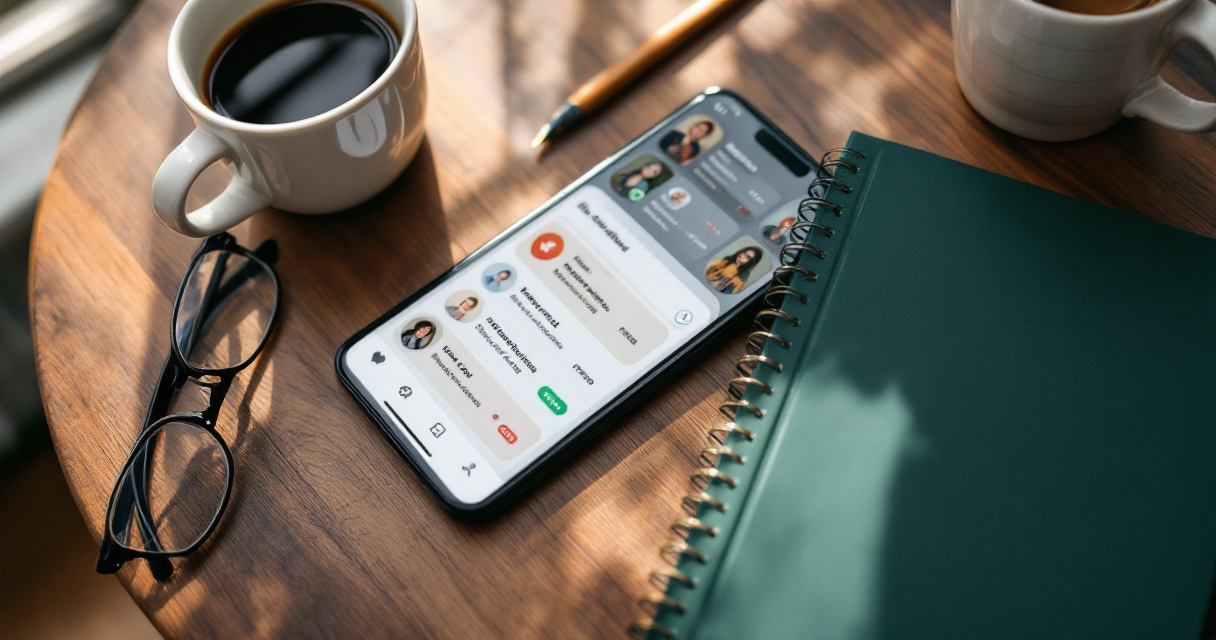
That matters because people read social signals instinctively. A profile feels more grounded when it includes evidence that someone is known by others and willing to be described by them. If you're new to the idea, what it means to be vouched for by a friend on a dating profile gives the practical version without the marketing confetti.
What makes the Lovebird model stand out
- Friend-backed trust: endorsements add accountability that a solo bio can't match
- Higher-quality filtering: users can look for profiles with more context before matching
- Optional background and credit health checks: extra signals for people who want a more cautious screening approach
- Intentional dating angle: the design favors substance over endless low-stakes swiping
One useful side effect is conversation quality. A friend's endorsement often gives you better material for a first message than "I like tacos and travel," which is the dating-app version of office beige.
How to make the model work for you
If you're considering using Lovebird, ask one or two friends who can speak specifically about your character, not just hype you like a boxing announcer. Specific endorsements land better than generic praise. For practical scripts and boundaries, how to ask a friend to vouch for you on a dating app covers the non-awkward version.
More examples help too. The guide to best examples of a friend vouching for someone in a dating profile shows what strong endorsements sound like when they feel human, not staged.
Key insight: Friend-backed profiles don't replace chemistry. They improve the odds that chemistry starts from something real.
Safety, cost, and match quality are where social proof pays off
Social proof pays off because it can save time, lower uncertainty, and improve screening before the first date. A profile with outside context gives you more to evaluate than polished photos and a joke about being "equally into hikes and naps."
Safety is the clearest benefit. People looking for more reassurance should compare friend-backed profiles with other verification tools, especially if they care about meeting intentionally. The guide to dating app safety in 2026 pairs well with this topic because safety isn't one feature, it's a stack of small protections.
Practical signs an app supports real profiles
- Profiles include third-party context, not just self-description
- Verification is visible and easy to understand
- Prompts reveal values, habits, and intentions
- The app discourages anonymous, disposable behavior
- Users can screen for quality before spending money or time
Cost matters too. If you're tired of paying premium prices to talk to people who wrote "just ask," you're not alone. Social proof can improve efficiency by helping you focus on profiles with clearer substance. For that angle, low cost dating apps for serious relationships and higher quality people in 2026 is a smart companion read.
A quick reality check
No app can guarantee honesty, compatibility, or a magical first date where both of you laugh at the same oddly specific meme reference. But stronger trust signals can reduce wasted effort. That's a practical win, especially if you're dating intentionally and don't want to spend every Thursday night decoding suspiciously perfect bios.
What to expect from authentic dating apps in 2027
Authentic dating apps in 2027 will likely add more layered verification and more human context, not less. As generative AI gets better at writing, editing, and persona mimicry, platforms will need trust signals that are harder to mass-produce.
The academic pattern already points there. The 2021 review by Zhai, Chu, and Chai shows how AI capabilities have expanded across human-facing systems, while later work like Feuerriegel, Hartmann, and Janiesch (2023) highlights how generative systems can create persuasive content quickly. Dating apps won't ignore that.
Likely next steps for the category
- More visible proof layers, such as references, verification badges, and optional checks
- Better disclosure around AI-generated text or edited content
- More emphasis on networks, values, and mutual accountability
- Smaller but higher-intent communities that trade scale for trust
That future fits the logic behind Lovebird and similar trust-first models. If dating apps spent the last decade optimizing for attention, the next phase should optimize for credibility. Visit thelovebird.co if you want to watch that shift up close, because this category is moving away from pure self-branding and toward profiles with receipts.
Conclusion
The best dating apps for authentic profiles and social proof don't just help you match, they help you judge whether a profile deserves your time. If you want volume, mainstream apps still have a place. If you want context, accountability, and a more intentional starting point, Lovebird is the more interesting option. Head to thelovebird.co to learn more, and if you're ready to try a friend-backed approach, start with Lovebird, then review your profile through the lens of authenticity, safety, and actual human credibility.