Social Proof in Dating Apps: Why Friend-Backed Profiles Build Trust in 2026
Learn how social proof in dating apps works, why friend-backed profiles feel more trustworthy, and how to use endorsements safely in 2026.
A polished dating bio can say "emotionally available," but a friend saying "shows up on time and remembers your dog's name" hits different. Social proof in dating apps is the trust signal created when other people, especially friends or shared connections, help confirm that a profile reflects a real person with real values.
Social proof: a psychological and social phenomenon where people look to others' actions, opinions, or approval when deciding how to behave in uncertain situations.
That uncertainty is the whole dating app plot. The Lovebird dating app is built around friend-backed profiles, so singles can add credible context before a match ever opens with "hey."
What is social proof in dating apps?
Social proof in dating apps is any visible signal that other people can verify, endorse, or contextualize a dater's identity, personality, or trustworthiness. It can include mutual friends, profile endorsements, friend-written blurbs, verified photos, testimonials, shared communities, and reputation cues.
A standard dating profile asks you to trust self-description. Social proof adds outside perspective. That matters because attraction is not only about photos or hobbies; it is also about perceived safety, social fit, and whether the person seems consistent across contexts.
Dating app: an online dating service delivered through a mobile app, often using smartphone features such as location to help users discover matches.
Common social proof signals users notice
| Signal | What it tells a match | Strong example |
|---|---|---|
| Friend endorsement | Someone knows you offline | "Maya plans great dates and actually texts back." |
| Mutual connection | Shared social context exists | "You both know Jordan from college." |
| Verified identity | The profile likely belongs to a real person | Photo or profile verification badge |
| Values cue | Lifestyle and intent are clearer | "Looking for a long-term relationship, not situationship jazz." |
| Community marker | You belong somewhere real | Volunteer group, faith group, hobby club |
For a deeper look at the language, see what "vouched" means in dating apps. The short version: a vouch works best when it is specific, human, and a little less glossy than a LinkedIn recommendation.
Why does social proof increase trust before a match?
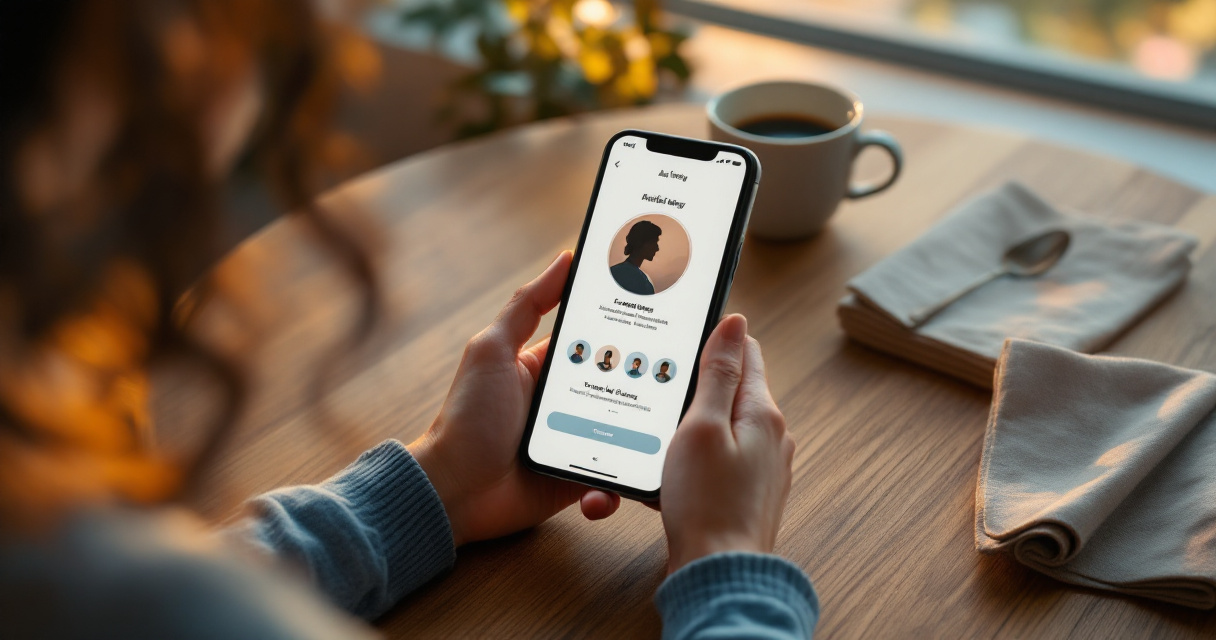
Social proof increases trust because dating app users make fast decisions with limited information, so outside confirmation lowers perceived risk. When a friend, mutual connection, or verification signal backs up a profile, the profile feels less like an ad and more like a person with witnesses.
Robert Cialdini popularized the term social proof in his 1984 book Influence, and the idea still fits app dating neatly. People often look for cues from others when they are unsure what to believe. Dating apps are basically uncertainty with better lighting.
The trust mechanics behind friend-backed dating
- Uncertainty reduction: third-party context helps users decide whether a profile feels real.
- Reputation transfer: trust in a friend can partially extend to the person they endorse.
- Specificity: concrete details feel more believable than generic claims.
- Accountability: people behave differently when their social circle is visible.
- Values matching: endorsements can reveal habits, kindness, reliability, and intentions.
Research on generative AI by Feuerriegel, Hartmann, and Janiesch (2023) explains how modern AI can generate persuasive text at scale. In dating, that makes third-party signals more useful, because a charming bio may be written by the person, a friend, or a very caffeinated chatbot.
Key insight: the most trustworthy profile signal is not the loudest claim; it is the claim another real person is willing to stand beside.
Which types of dating app social proof actually help?
The best dating app social proof is specific, consent-based, and relevant to how someone dates, not just how popular they look. Useful proof helps a match answer: "Are they real, safe enough to meet, and aligned with what I want?"
Popularity alone is weak proof. Ten party photos may show you have friends, or just a talented camera roll. A short endorsement from someone who knows your character often says more.
Comparing stronger and weaker trust signals
| Type | Trust value | Best use | Watch-out |
|---|---|---|---|
| Friend vouch | High | Character, consistency, dating intent | Needs consent and specificity |
| Mutual friends | Medium | Shared context | Can feel invasive if overused |
| Verification badge | Medium | Identity confidence | Does not prove compatibility |
| Social media links | Low to medium | Lifestyle context | Can become performance theater |
| Group photos | Low | Shows social life | Confusing if every photo is a committee meeting |
The Lovebird dating app platform focuses on friend-backed endorsements because friends often describe traits people forget to mention themselves: patience, humor under pressure, generosity, and whether they are secretly excellent at planning cheap tacos.
If you want practical wording, review these friend vouching examples for dating profiles. Good endorsements sound like something a real friend would say after brunch, not a press release.
What a credible vouch should include
- Relationship context: how the friend knows you.
- Specific trait: one behavior, not a vague compliment.
- Dating relevance: why that trait matters in a relationship.
- Balanced tone: warm, but not suspiciously perfect.
- Consent: everyone involved knows what is being shared.
How can you add social proof without making your profile weird?
You can add social proof without making your profile weird by asking trusted friends for short, specific, honest endorsements and pairing them with your own clear dating intentions. The goal is credibility, not a fan club wearing matching hoodies.

A strong profile still needs your own voice. Friend input should support it, not replace it. Think of your bio as the main dish and endorsements as seasoning; nobody wants to eat a bowl of paprika.
A simple 5-step profile upgrade
- Choose two friends who know different sides of you. One might know your values, another your day-to-day habits.
- Ask for one concrete example. "What am I like when I care about someone?" beats "Say I'm great."
- Set boundaries. Tell them what topics are private.
- Keep it short. One or two sentences often work better than a biography.
- Match the vouch to your intent. If you want commitment, ask friends to speak to reliability, communication, and emotional maturity.
If asking feels awkward, use this guide on how to ask a friend to vouch for you on a dating app. The ask should feel casual: "Can you write one honest sentence about what I'm like to date?" is plenty.
Research by Dwivedi, Kshetri, Hughes, and colleagues (2023) examined opportunities and challenges around generative conversational AI. For dating profiles, the practical lesson is simple: as AI-written bios become more common, human-backed signals become more valuable.
A profile should make someone think, "I can picture meeting this person," not "Their marketing department is thriving."
What will social proof in dating apps look like in 2027?
By 2027, social proof in dating apps will likely become more consent-based, friend-backed, and safety-aware as users look beyond bios and badges. The next trust layer will combine identity checks, social context, and values signals without turning dating into a background investigation with better fonts.
Expect a shift from "prove you are attractive" to "show you are real, respectful, and aligned." Younger daters already care about authenticity, cost, safety, and intention. Friend-backed context fits that mood because it adds a human filter before time, money, and emotional bandwidth get spent.
What to expect next
- More friend-backed profiles: endorsements will help profiles feel less self-written and more grounded.
- Clearer consent controls: users will want approval over what friends can share.
- Layered verification: photo checks, friend signals, and optional screening will work together.
- Values-first matching: apps will highlight lifestyle, relationship goals, and social accountability.
- Less tolerance for generic bios: "I love travel and food" will remain legal, but spiritually questionable.
Safety will stay central. For practical steps, read dating app safety guidance for 2026, especially before meeting someone new.
With Lovebird dating app, the bigger idea is not to make dating colder or more formal. It is to bring back the old-school "my friend knows someone you'd like" moment, minus the aunt who thinks every single person within 40 miles is your soulmate. Visit thelovebird.co if you want a profile that lets trusted friends help tell the truer story.
FAQ about social proof in dating profiles
Is social proof the same as profile verification?
No, social proof and profile verification are related but different. Verification usually confirms identity signals, such as photos or account ownership. Social proof adds social context, such as friend endorsements, mutual connections, or reputation cues. The strongest profiles often combine both: "This person is real" and "people who know them can describe their character."
Can friend endorsements make dating safer?
Friend endorsements can support safer dating, but they should not replace basic safety steps. A vouch can add accountability and context, especially when it includes specific behavior. Still, you should use normal precautions: verify identity, meet in public, tell someone your plan, and trust your instincts if something feels off.
What should a friend say in a dating profile vouch?
A good friend vouch should name one real trait and one real example. Instead of "Alex is amazing," try "Alex is the friend who remembers everyone's coffee order and checks in after a hard week." Specific, ordinary details sound believable because real affection usually lives in the small stuff.
Does social proof help people looking for intentional relationships?
Yes, social proof can help intentional daters filter for values, consistency, and relationship readiness. Friend-backed comments can reveal whether someone communicates well, keeps commitments, or treats people kindly. That context helps you move past surface-level swiping and toward matches who fit your actual goals.
Conclusion
Social proof in dating apps works because romance starts with trust, not just attraction. The strongest signals are specific, consent-based, and grounded in real relationships: a friend's honest vouch, a clear intention, and enough verification to make meeting feel reasonable.
Your next step is simple: ask one trusted friend for a two-sentence endorsement, update your profile with one values-based line, and remove anything that sounds like it was assembled by a committee of dating clichés. If friend-backed dating sounds like your kind of upgrade, head to thelovebird.co and build a profile with Lovebird dating app that other real humans can stand behind.